NUS CHCI Workshop Explores Global Perspectives on Hydrogen Infrastructure and Deployment
On 25 June 2026, the NUS Centre for Hydrogen Innovations (CHI) hosted a workshop themed “Global Perspectives on Hydrogen Infrastructure and Deployment”, bringing together experts from academia and industry to examine the opportunities and challenges shaping hydrogen deployment across different regions and parts of the value chain.
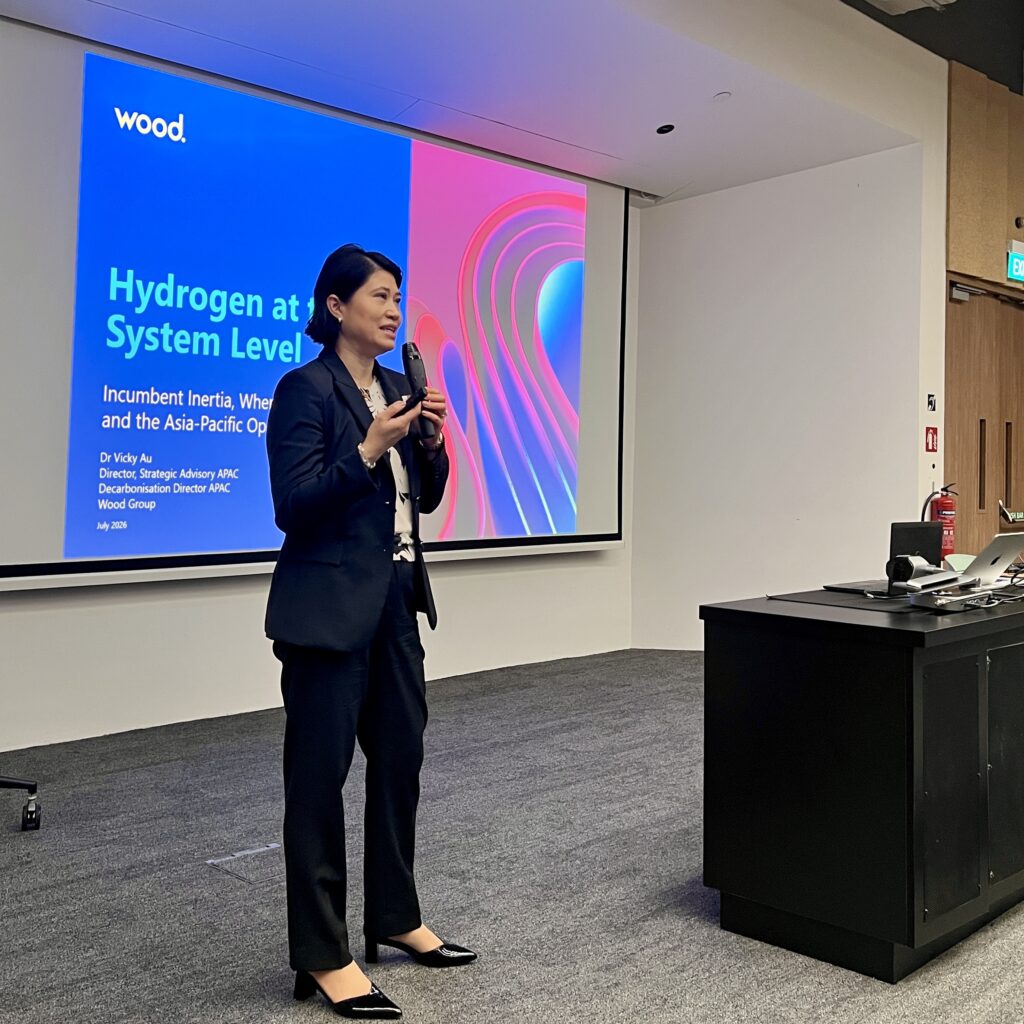
The workshop opened with Dr Vicky Au from Wood, who presented “Hydrogen at the System Level: Incumbent Inertia, When Strategies Stall, and the Asia-Pacific Opportunity.” Her presentation examined the systemic factors that can slow the clean energy transition, including the challenge of overcoming deeply entrenched fossil fuel systems and the gap between project announcements and actual capital commitment. The session also considered the opportunities for hydrogen development across the Asia-Pacific region.
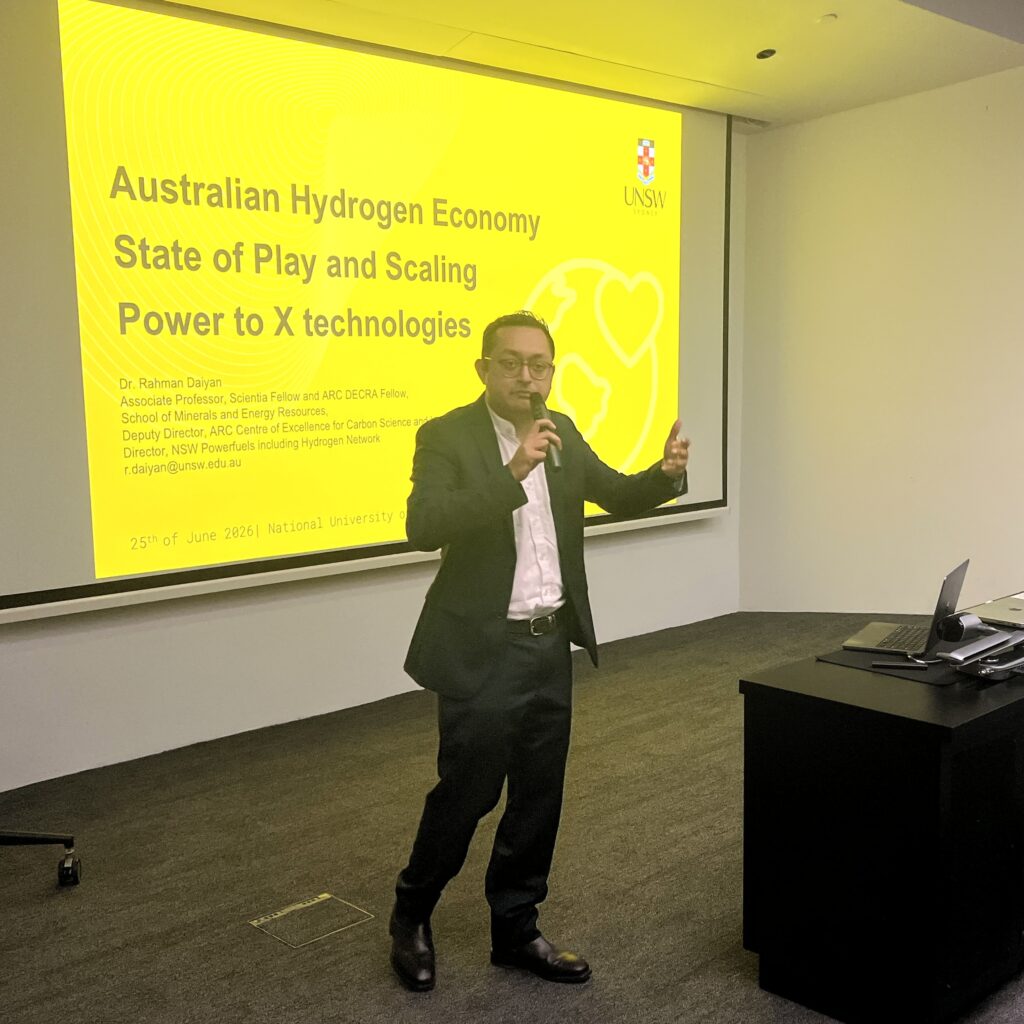
Turning to Australia, Prof Rahman Daiyan from the University of New South Wales presented “Australian Hydrogen Economy State of Play and Scaling Power to X Technologies.” He provided an overview of Australia’s hydrogen landscape and research ecosystem, highlighting the range of hydrogen initiatives and research centres across the country. Drawing on his own experience in translating research into start-ups, he also shared perspectives on moving hydrogen innovation from the laboratory towards commercial application and scaling Power-to-X technologies.
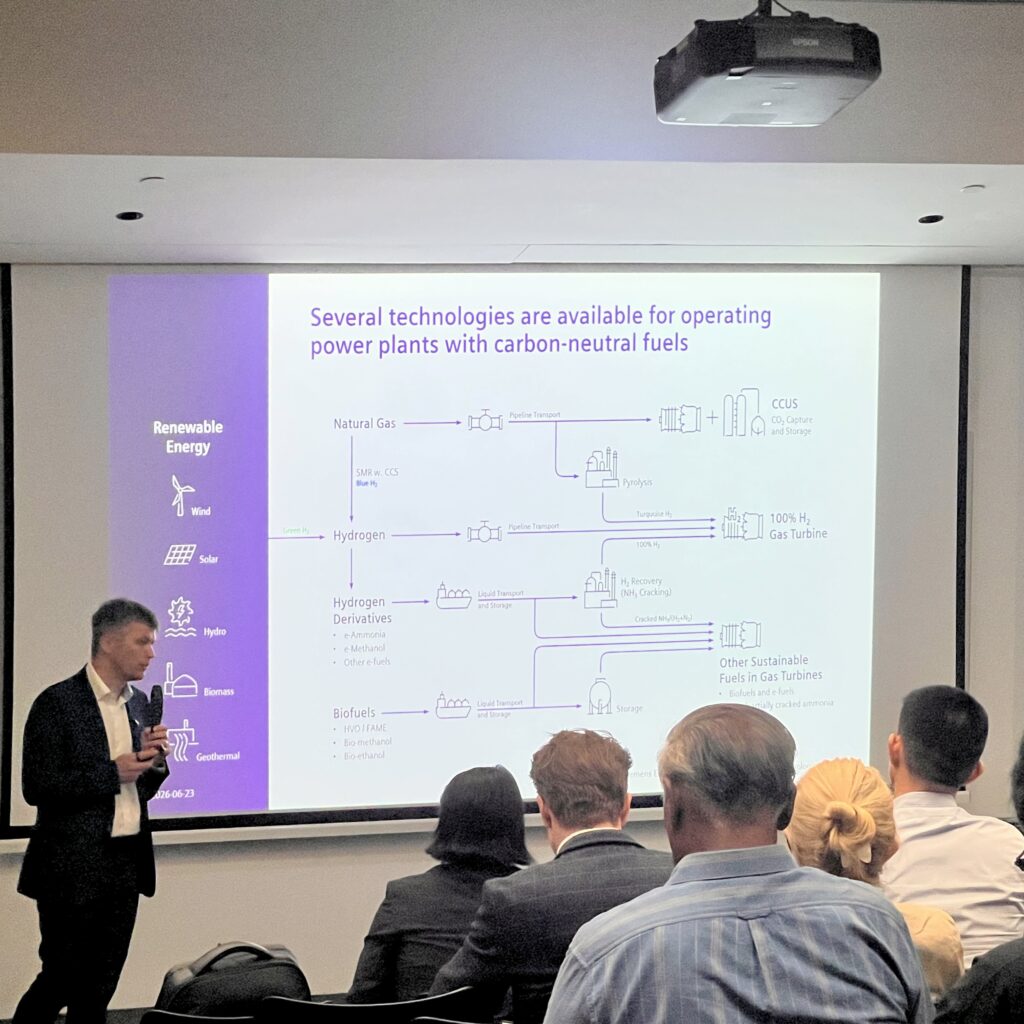
The workshop then shifted from deployment strategy to power generation. In “Towards 100% H₂ Power Generation,” Dr Ghenadie Bulat from Siemens Energy shared the company’s experience in testing 100% hydrogen turbine combustion and discussed progress in the development of ammonia-ready turbines. His presentation offered an industry perspective on the technological advances supporting the use of hydrogen and ammonia in future power generation.
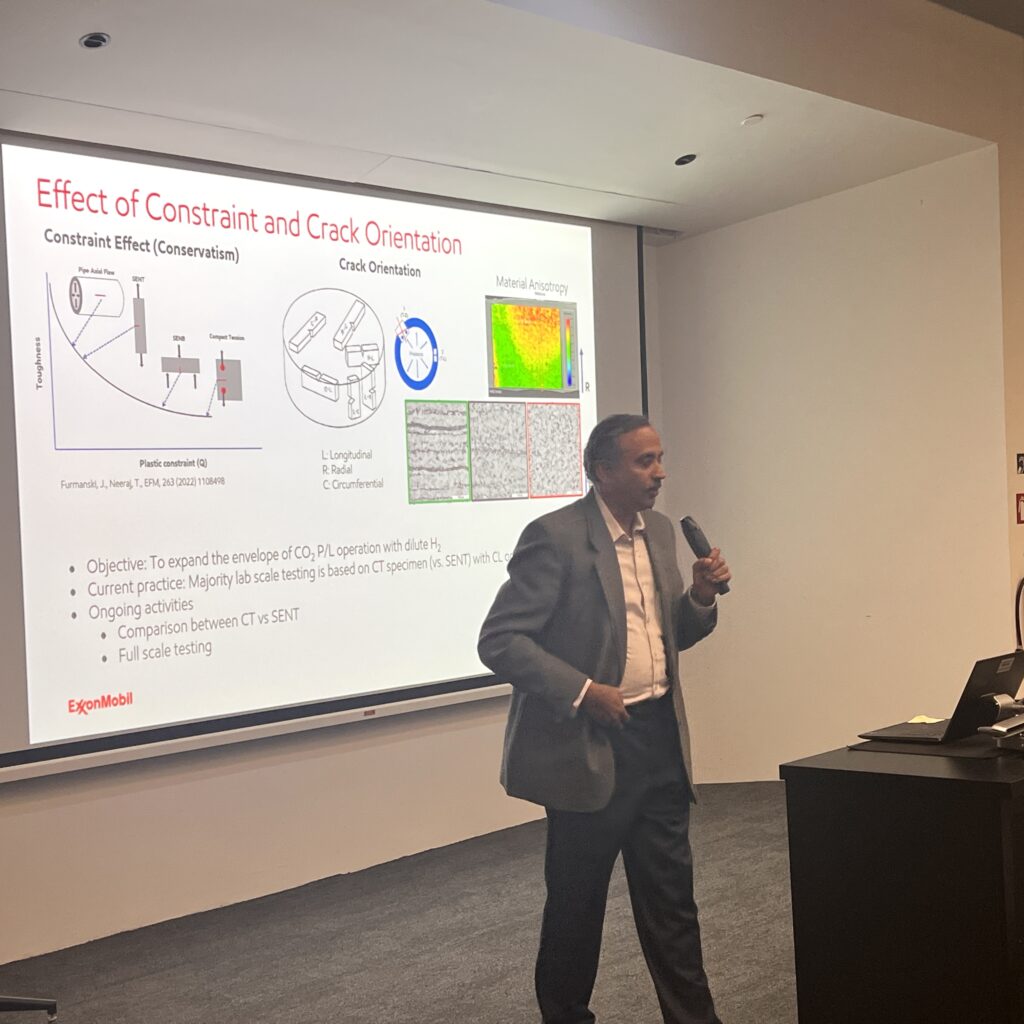
Infrastructure and transportation were brought into focus by Dr Neeraj Thirumalai from ExxonMobil, who presented “Hydrogen Embrittlement in Energy Industry: Perspective on Mechanisms and Emerging Challenges in H₂ and CO₂ Transportation.” He highlighted the critical role of pipelines in scaling the hydrogen economy, particularly the potential repurposing of existing natural gas pipelines. The presentation examined hydrogen embrittlement and the associated integrity challenges facing H₂ and CO₂ transportation infrastructure.
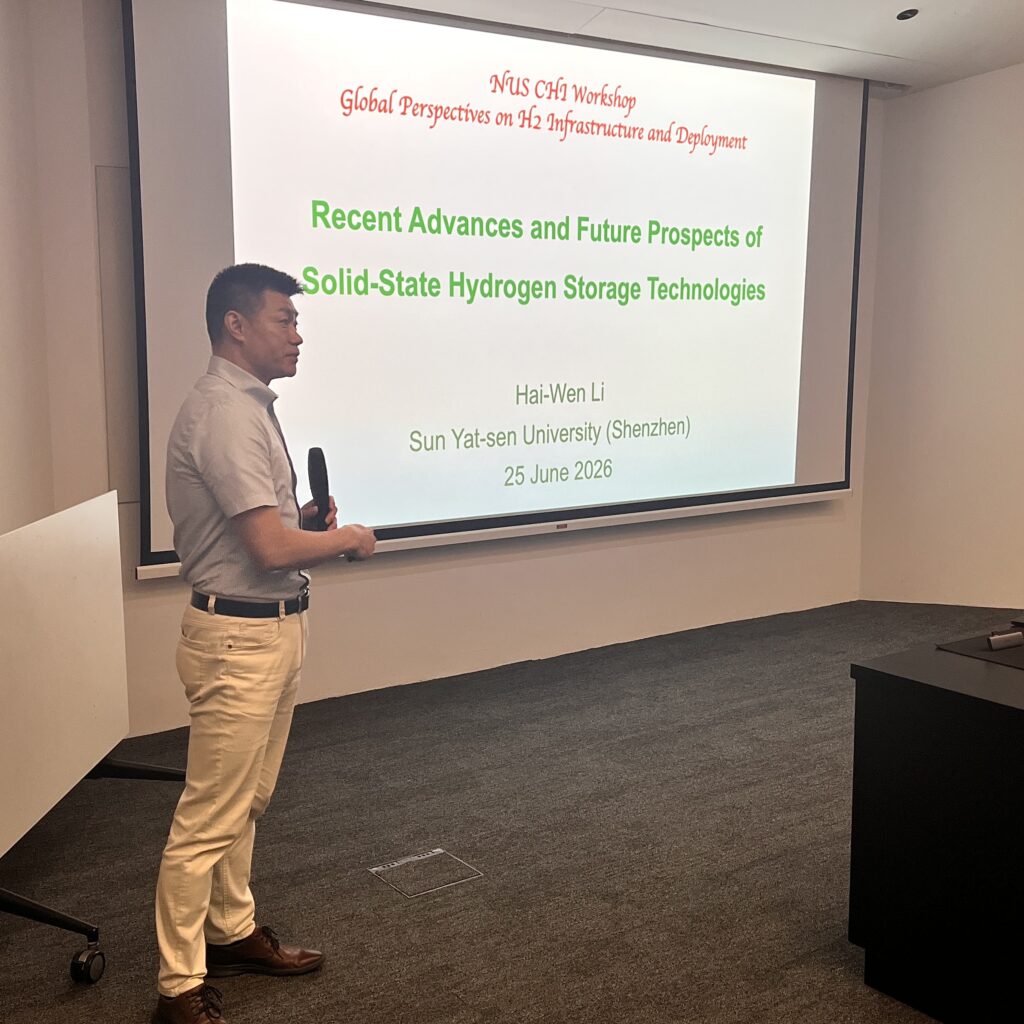
Concluding the technical sessions, Prof Li Haiwen from Sun Yat-sen University presented “Recent Advances and Future Prospects of Solid-State Hydrogen Storage Technologies.” He shared recent developments in solid-state hydrogen carriers and highlighted emerging applications, including fuel cell buses in China using metal hydride-based hydrogen storage.
Together, the five presentations offered a broad perspective on hydrogen infrastructure and deployment, highlighting the importance of collaboration across academia and industry in scaling the hydrogen economy.
NUS CHI thanks all speakers and participants for their valuable contributions and engaging discussions. The workshop provided an important platform for exchanging perspectives on the practical, technological, and systemic challenges that will shape the next phase of hydrogen deployment.